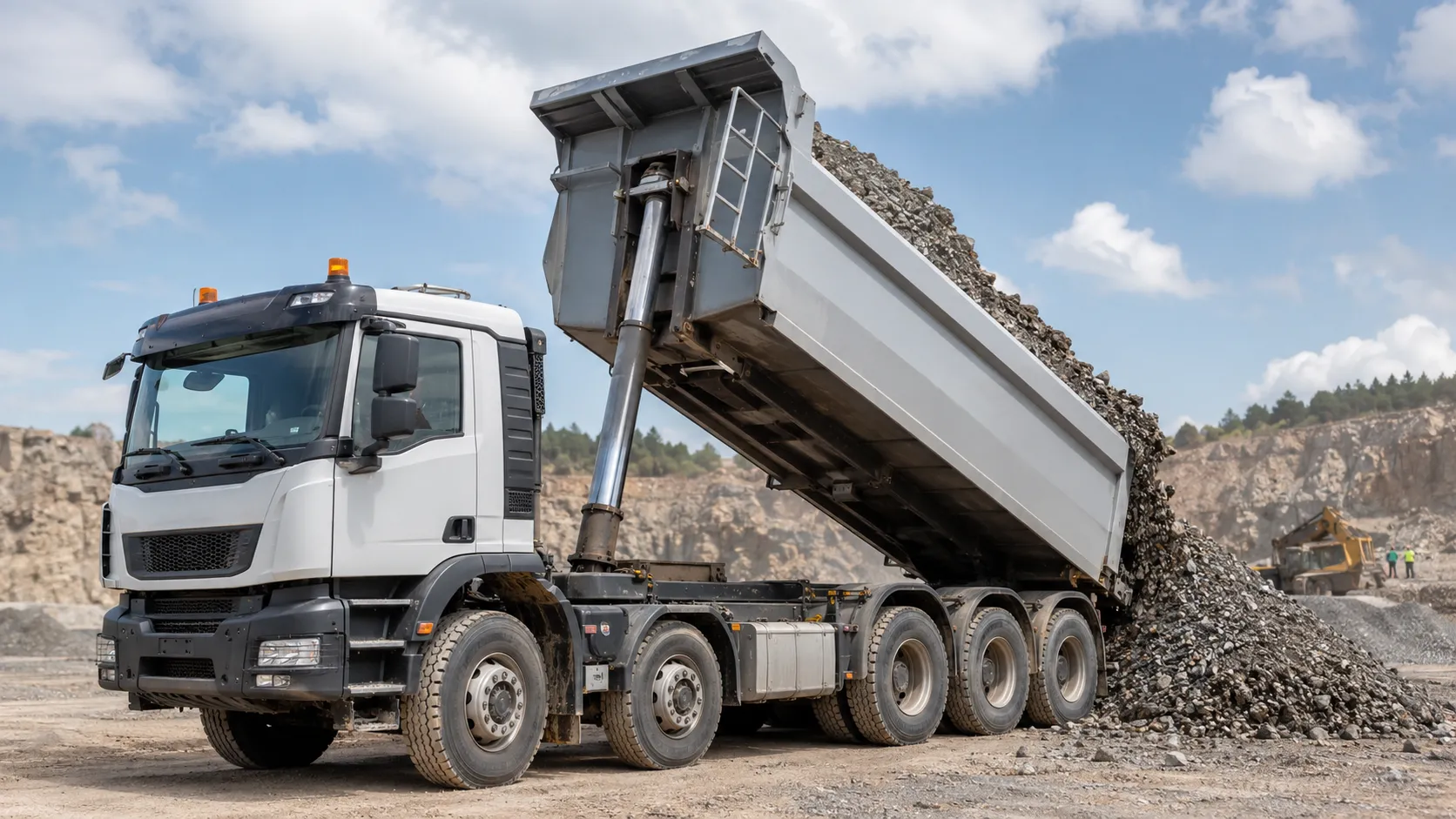
A dump truck may tip slowly under full load because the cargo exceeds the intended payload, the PTO or hydraulic pump cannot supply enough flow, the hydraulic oil is too cold or contaminated, a hose or filter restricts oil movement, the cylinder leaks internally, or sticky material resists unloading. This article is intended for mine operators, construction contractors, fleet managers and international buyers comparing heavy-duty dump trucks. The most important checks are whether the truck lifts normally when empty, whether engine speed and PTO engagement are correct, whether hydraulic pressure and flow remain stable, and whether the cargo is evenly distributed. A slow tipping cycle should not be treated only as a cylinder problem. The complete system—including the pump, valves, tank, hoses, cylinder, body hinges and transported material—must be inspected before parts are replaced.
What Is a Dump Truck Tipping Cycle?
A tipping cycle normally includes:
- Positioning the truck
- Engaging the PTO
- Raising the dump body
- Releasing the cargo
- Lowering the body
- Disengaging the PTO
There is no single normal cycle time for every dump truck. Raising speed depends on hydraulic pump flow, cylinder size, body weight, payload, engine speed, hose and valve capacity, and the lifting geometry.
Hydraulic-cylinder speed is primarily related to oil flow and effective cylinder area. Parker’s telescopic-cylinder guidance explains that pump flow determines extension speed and that different telescopic stages can move at different speeds because their effective areas are different.
A longer tipping cycle is not automatically a defect. It becomes a concern when:
- The same truck is noticeably slower than before
- The body raises normally when empty but struggles when loaded
- Lifting speed changes suddenly
- The cylinder stops during extension
- The hydraulic oil overheats
- The pump becomes unusually noisy
- The body lowers extremely slowly
- Oil leaks appear around hoses, valves or cylinder seals
Start With the Symptom: When Does the Dump Truck Lift Slowly?
Before replacing the pump or cylinder, determine exactly when the problem occurs.
The body lifts normally when empty but slowly under load
Possible causes include:
- Excessive payload
- Low hydraulic pressure
- Pump wear
- Internal leakage
- Incorrect relief-valve setting
- Uneven cargo distribution
- Excessive body or hinge resistance
The body lifts slowly whether empty or loaded
Check:
- PTO engagement
- Engine speed
- Pump flow
- Oil viscosity
- Oil level
- Suction restrictions
- Blocked filter
- Restricted hoses or valves
The body begins lifting but then stops
Possible causes include:
- Insufficient pressure
- Overload
- Relief valve opening
- Pump wear
- Cylinder binding
- Side loading or misalignment
- Cargo shifting toward one side
The body rises normally but lowers slowly
The return-flow path may be restricted. Parker notes that the retraction speed of a single-acting telescopic cylinder depends on the load pushing the cylinder down and the hydraulic oil’s ability to return to the tank. Light loads, restricted flow and internal friction can slow retraction.
Overloading Is the First Condition to Check
A hydraulic tipping system is designed around a specific combination of:
- Cargo-body weight
- Rated payload
- Cylinder size
- Pump pressure
- Pump flow
- Body pivot position
- Lifting angle
If the actual cargo exceeds the intended payload, the cylinder requires greater force to begin lifting.
Overloading may result from:
- Dense material reaching the weight limit before the body is full
- Wet sand or sludge weighing more than expected
- Large rocks creating uneven point loads
- Operators estimating the load only by body volume
- Additional body liners increasing empty weight
- Material accumulating inside the body after previous trips
A truck with a large cargo body should not be loaded until the body appears visually full without considering cargo density and chassis payload.
Wentutrade’s HOWO 6×4 dump truck is listed for approximately 30–40-ton applications, while its HOWO 8×4 dump truck is listed for approximately 40–50 tons. Final payload and body configuration must be confirmed for the transported material and destination-market limits.
Signs that the load may be excessive
- The body lifts normally when empty
- Engine speed drops sharply during lifting
- The relief valve operates continuously
- The front of the body barely moves
- The pump or hydraulic oil overheats
- The truck leans because the cargo is uneven
- Tires or suspension appear excessively compressed
Do not increase hydraulic pressure to compensate for an overloaded truck unless the approved system specification explicitly allows an adjustment.
PTO and Pump Output Directly Affect Lifting Speed
The power take-off transfers engine power to the hydraulic pump. If the PTO is not fully engaged or the engine operates below the required speed, pump output may be insufficient.
Check:
- PTO engagement indicator
- Air or electrical actuation
- Transmission position
- Engine speed during tipping
- PTO shaft or coupling
- Pump mounting
- Unusual noise
- Oil foaming
- Pump temperature
A worn hydraulic pump may still move an empty body but fail to maintain pressure and flow under full load.
Parker’s hydraulic troubleshooting guidance states that reduced pump delivery under pressure may indicate internal pump wear, excessive oil temperature, a slipping drive, damaged coupling or related drive failure.
Why does engine speed matter?
Pump flow generally increases with pump rotational speed within the approved operating range.
If engine speed is too low:
- Oil flow may be insufficient
- Cylinder extension becomes slower
- The truck may struggle at the beginning of the lift
- The operator may keep the PTO engaged longer
Excessive engine speed is not a safe solution. It may increase heat, noise, pressure shock and pump wear. Operators should follow the truck and hydraulic-system instructions.
Hydraulic Oil Temperature and Viscosity Can Slow the Cycle
Hydraulic oil changes viscosity with temperature.
When the oil is too cold, it becomes thicker and moves less easily through:
- Suction lines
- Pump passages
- Control valves
- Hoses
- Cylinder ports
- Return filters
High viscosity creates additional pressure loss and can reduce hydraulic efficiency. Parker identifies excessive viscosity as a cause of poor fluidity, increased pressure losses and pump filling problems.
When oil becomes too hot, viscosity may fall too low. This can increase internal leakage through the pump, valve and cylinder sealing clearances, reducing the useful flow and pressure available for lifting.
What should operators check?
- Hydraulic oil grade
- Ambient temperature
- Oil temperature after repeated cycles
- Oil level
- Oil color and odor
- Foaming
- Water contamination
- Maintenance history
- Whether different oils were mixed
Do not choose hydraulic oil only by climate. The pump, valves, seals and manufacturer’s specification must all be considered.
Contaminated Oil and Blocked Filters Restrict Hydraulic Flow
Dirt, water and damaged oil can reduce performance and accelerate component wear.
Possible contamination sources include:
- Dirty filling equipment
- Open tank caps
- Damaged breathers
- Worn cylinder wipers
- Condensation
- Hose replacement
- Dusty mine or construction sites
- Poor maintenance procedures
Contamination can damage seals and cylinder surfaces. Parker’s cylinder troubleshooting guidance explains that suspended particles can wear seals and rods, while proper filtration and oil circulation help remove contaminants and return oil to the reservoir for filtering and cooling.
A clogged filter may create:
- Restricted pump suction
- Reduced oil flow
- Pump noise
- Cavitation
- Slow lifting
- Increased oil temperature
Eaton describes fluid condition and contamination monitoring as important for protecting pumps, seals and other hydraulic components.
Maintenance points
- Replace filters according to the maintenance schedule
- Inspect the tank breather
- Clean around the filler before adding oil
- Use sealed, clean oil containers
- Check magnetic plugs or strainers
- Investigate repeated filter blockage
- Do not return visibly contaminated oil to the tank
Restricted Hoses and Valves Reduce Oil Delivery
The hydraulic pump may produce adequate flow, but the oil still has to reach the cylinder.
Restrictions can result from:
- Undersized hoses
- Kinked hoses
- Crushed lines
- Internally damaged hose walls
- Excessive elbows
- Incorrect fittings
- Partially closed valves
- Blocked ports
- Contaminated control valves
- Incorrectly connected return lines
Parker notes that cylinder speed is influenced by fluid flow in the connecting lines and that excessive velocity or undersized flow paths can create turbulence, pressure loss and hydraulic shock.
The operator may notice:
- One hose becoming unusually hot
- Slow movement in both directions
- Pump noise
- Jerky cylinder extension
- Pressure building without normal body movement
Do not touch hydraulic lines immediately after operation; they may be hot or pressurized.
Cylinder Leakage, Binding and Misalignment Affect Lifting
A telescopic cylinder can lose performance through external or internal leakage.
External leakage
Visible oil may appear around:
- Cylinder stages
- Hose fittings
- Control valves
- Pump seals
- Tank connections
Internal leakage
Oil bypasses internal sealing surfaces without appearing outside the system.
Possible symptoms include:
- The body raises slowly
- The cylinder pauses between stages
- The body drifts downward
- The pump continues running without normal movement
- The oil heats rapidly
Cylinder misalignment can also create side loading and binding.
Parker states that telescopic cylinders used on dumping vehicles are lifting devices, not structural stabilizers. Misaligned mounts, excessive side loads or tight mounting pins may cause scoring, leakage, improper sequencing or stalled movement.
Inspect:
- Upper and lower cylinder mounts
- Mounting pins
- Cylinder-stage surfaces
- Body alignment
- Subframe condition
- Hinge wear
- Uneven body movement
- Signs of lateral loading
Never enter beneath a raised body supported only by hydraulic pressure. Use the approved mechanical body support and follow the manufacturer’s lockout procedure.
Body Hinges and Subframe Resistance Can Mimic a Hydraulic Problem
The hydraulic system may be functioning correctly while the body structure resists movement.
Check:
- Dry or seized pivot points
- Bent hinge pins
- Damaged body guides
- Twisted subframe
- Cracked welds
- Deformed body floor
- Misaligned rear hinges
- Foreign material trapped between the body and frame
A body that lifts unevenly can place side load on the cylinder and slow the tipping cycle.
This may occur after:
- Loading one side more heavily
- A rollover or impact
- Repeated operation on uneven ground
- Welding repairs without alignment checks
- Carrying large rocks that deform the body floor
The inspection should cover both the hydraulic system and the complete tipping structure.
Sticky Cargo Can Delay Both Lifting and Unloading
Wet clay, sludge, asphalt, cohesive soil and fine wet material may adhere to the body floor and side walls.
The cargo may:
- Remain in the front of the body
- Release suddenly
- Shift to one side
- Require a higher tipping angle
- Increase the time the body stays raised
- Create an unstable off-center load
Parker describes a “hung load” as cargo that remains attached to the body when it is raised and warns that moisture and adhesion can create a rollover hazard. It advises lowering the body when this condition occurs rather than using aggressive vehicle movement to free the material.
Possible design and operating solutions
Depending on the material:
- U-shaped dump body
- Smooth body floor
- Suitable wear liner
- Heated or insulated body for applicable materials
- Tailgate design matched to the cargo
- Correct body angle
- Controlled loading distribution
- Regular body cleaning
Wentutrade’s HOWO 6×4 dump truck and HOWO 6×6 dump truck list rectangular and U-shaped cargo-body options.
A Quick Dump Truck Tipping Diagnosis Table
| Symptom |
Likely areas to inspect |
| Slow only when loaded |
Payload, pressure, pump wear, cylinder leakage |
| Slow when empty and loaded |
PTO, engine speed, oil, filter, hose restriction |
| Raises and then stops |
Overload, relief valve, pump or cylinder binding |
| Jerky movement |
Air, low oil, contamination, cylinder sequencing |
| Pump is noisy |
Low oil, suction restriction, cavitation or pump wear |
| Oil overheats |
Internal leakage, overload, restrictions or wrong oil |
| Body drifts down |
Valve or cylinder internal leakage |
| One side rises unevenly |
Load distribution, body alignment or hinge damage |
| Cargo remains inside |
Sticky material, body shape, liner or low tipping angle |
| Body lowers slowly |
Return-flow restriction, valve setting or hinge resistance |
This table is a starting point only. Hydraulic pressure testing and component repair should be performed by qualified technicians.
What Should Buyers Confirm Before Ordering a Dump Truck?
A reliable tipping cycle begins with the correct truck and hydraulic configuration.
Include the following information in the RFQ:
| RFQ detail |
Information to provide |
| Transported material |
Sand, gravel, ore, coal, soil, sludge or asphalt |
| Material condition |
Dry, wet, sticky, abrasive or variable |
| Required payload |
Tons per trip |
| Body volume |
Struck and heaped capacity |
| Working cycle |
Loads and tipping cycles per day |
| Haul distance |
One-way distance |
| Terrain |
Paved, quarry, mine or soft ground |
| Maximum gradient |
Uphill and downhill slope |
| Axle configuration |
4×2, 6×4, 6×6 or 8×4 |
| Body type |
Rectangle, U-shape or custom |
| Hydraulic system |
Cylinder type, pump, PTO and valve requirements |
| Climate |
Lowest and highest operating temperature |
| Body liner |
Material and thickness |
| Tailgate |
Standard, reinforced or custom |
| Destination |
Country and port |
| Compliance |
Emission, road and registration requirements |
| Quantity |
Single truck, trial order or fleet |
Wentutrade’s Dump Truck product category includes HOWO, HOHAN, SHACMAN, SITRAK, Dongfeng and mining models in different axle and payload classes.
Which Wentutrade Dump Truck Configuration Fits the Job?
HOWO 6×4 Dump Truck
The HOWO 6×4 model is listed with:
- Approximately 30–40-ton loading capacity
- 5600 × 2500 × 1500 mm cargo body
- Rectangular or U-shaped body
- Multiple horsepower options
It is positioned for mine, ore, sludge and short- to medium-distance transport.
HOWO 6×6 Dump Truck
The HOWO 6×6 model is listed with:
- Approximately 25–35-ton loading capacity
- 5170 × 2300 × 1200 mm cargo body
- Rectangular or U-shaped body
- All-wheel-drive configuration for demanding terrain
Its product page identifies the chassis, hydraulic lifting mechanism, cargo body and PTO as the main dumping-system components.
HOWO 8×4 Dump Truck
The HOWO 8×4 model is listed with:
- Approximately 40–50-ton loading capacity
- 7600 × 2500 × 1500 mm cargo body
- Two 16-ton rear axles
- Multiple horsepower options
It is intended for higher-capacity earth, sand and bulk-material transport.
The final hydraulic system should be matched to the cargo body, rated payload, operating frequency, climate and unloading conditions rather than selected only from truck horsepower.
What Determines Dump Truck Tipping Performance?
Key factors include:
- Rated payload
- Cargo density
- Body weight
- PTO ratio
- Pump flow
- System pressure
- Cylinder size and stroke
- Hydraulic oil viscosity
- Hose and valve capacity
- Filter condition
- Body hinge alignment
- Cargo adhesion
- Engine speed
- Ambient temperature
A larger hydraulic cylinder may provide more lifting force but may require more oil volume and take longer to extend when pump flow remains unchanged. A faster pump may reduce cycle time, but the hoses, valves, reservoir and cylinder ports must be able to handle the flow safely. Parker’s cylinder design guidance directly relates cycle time to cylinder oil volume and pump flow.
Frequently Asked Questions
Why does my dump truck lift slowly only when loaded?
The most likely areas are excessive payload, insufficient hydraulic pressure, pump wear, internal leakage or cylinder and body resistance. First confirm the actual load weight and whether the truck lifts normally when empty.
Can low hydraulic oil cause slow tipping?
Yes. A low oil level can allow air into the system, interrupt pump supply and cause noisy or jerky operation. Find and repair the source of oil loss before refilling.
Does cold weather slow dump truck lifting?
Yes. Cold hydraulic oil is more viscous and creates greater resistance in the suction line, hoses, valves and cylinder ports. Use only the oil grade approved for the equipment and climate.
Can a blocked hydraulic filter slow the tipping cycle?
Yes. A restricted filter or suction strainer can reduce pump flow and cause pressure loss, noise, overheating or cavitation.
Why does the dump body lift but not reach full height?
Possible causes include low oil level, overload, relief-valve operation, pump wear, cylinder-stage problems, hose restrictions or mechanical binding.
Can sticky material damage the tipping system?
Sticky cargo can remain attached to the body, shift unevenly and create an unstable load. Do not move aggressively or brake suddenly with the body raised to release the material.
Should I increase engine RPM to make the body lift faster?
Only within the approved operating procedure. Excessive engine or pump speed may create heat, cavitation, pressure shock and component damage.
Is the hydraulic cylinder responsible for every slow cycle?
No. PTO engagement, pump condition, oil viscosity, filters, hoses, valves, body hinges and cargo behavior must also be checked.
Reduce Tipping Time Without Sacrificing Safety
A slow tipping cycle should be diagnosed systematically:
- Confirm the actual payload.
- Test the body empty and loaded.
- Check PTO engagement and engine speed.
- Inspect oil level, grade and temperature.
- Check filters, suction lines and hoses.
- Test hydraulic pressure and pump flow.
- Inspect cylinder leakage and alignment.
- Lubricate and inspect body hinges.
- Evaluate cargo distribution and adhesion.
- Compare the system with the approved truck specification.
When requesting a dump truck recommendation, send Juxiang:
- Transported material
- Material density and moisture
- Required payload and body volume
- Tipping cycles per day
- Road and terrain conditions
- Operating temperature
- Preferred axle configuration
- Destination country
- Required quantity
Contact Juxiang Automotive to receive a dump truck, cargo-body and hydraulic-system recommendation based on your hauling and unloading conditions.