Direct Answer: An export fleet should not copy a universal dump-truck spare-parts list. The first shipment should be built from the actual duty cycle, fleet size, truck configuration, local technician capability, failure criticality, and replenishment lead time. Buyers should also request parts catalogs, manuals, wiring and hydraulic diagrams, identification data, commissioning records, and a replenishment plan before deciding spare quantities.
This matters most to quarry operators, contractors, fleet owners, distributors, and project buyers importing dump trucks into markets where sea freight, customs clearance, remote job sites, or limited local diagnostics can make a small component failure expensive. Wentu supplies multiple dump truck configurations for overseas projects, including HOWO, SHACMAN, FAW and other truck families. The maintenance package for any order should be tied to the exact build configuration rather than to the brand name alone.
Why Does a Universal Dump Truck Spare-Parts List Fail?
A generic list usually mixes three very different needs: routine consumables, failure-critical spares, and service or diagnostic items. It may also assume one engine, transmission, axle, brake system, hydraulic layout, electrical harness, or filter specification across trucks that only look similar from the outside.
For an export fleet, the correct question is not “Which parts wear on dump trucks?” It is “Which failures would stop this fleet, how quickly can each item be replenished locally, and what evidence proves that the proposed spare matches the delivered truck?”
| Planning Input | Why It Matters | Procurement Risk if Missing |
| Truck model / build configuration | Links spare parts to the actual supplied vehicle | A visually similar part may not match the delivered engine, axle, transmission, hydraulic or electrical system. |
| Fleet size and operating hours | Helps separate one-truck contingency from fleet-level stock | Quantities are copied from another fleet with a different utilization rate. |
| Duty cycle | Shows exposure to dust, gradients, loading frequency, rough roads, heat and repeated tipping | Fast-moving items are understocked while low-priority parts consume the budget. |
| Local service capability | Defines what can be diagnosed, repaired or rebuilt locally | The fleet receives parts that local technicians cannot identify or install confidently. |
| Replenishment lead time | Shows which failures justify first-shipment stock | A low-cost component creates long downtime because replacement must come by international freight. |
Industry experience point: A long spare-parts list is not automatically a safer list. Overbuying obsolete or low-use parts can be just as expensive as understocking a failure-critical component.
How Should the Duty Cycle Be Mapped Before Spare Quantities Are Discussed?
The spare-parts decision should start with how the trucks will work. A quarry fleet running repeated short haul cycles on dusty gradients has a different maintenance exposure from trucks moving construction material between dispersed sites or operating longer road-transfer legs.
Buyers should document the hauled material, average and difficult road conditions, gradients, climate, dust level, water or mud exposure, number of cycles, annual operating hours, loading method, tipping frequency, and whether trucks return to a central workshop each shift.
For example, a buyer reviewing a HOWO 6×4 dump truck should still provide the exact engine, transmission, axle and body configuration from the project order before asking for a maintenance package. The same model family can be ordered in different configurations, so model name alone is not enough to establish parts interchangeability.

Industry experience point: Fleets often discover after delivery that their maintenance stock was built around annual mileage while the real wear driver is engine hours, tipping cycles, dust exposure, braking frequency, or repeated low-speed haul operation.
Which Maintenance Records and Part Identifiers Should the Supplier Hand Over?
The first shipment should include information that lets the owner identify the delivered configuration later. A box of spares without usable part identification can become difficult to replenish six months after commissioning.
- vehicle identification and build configuration records;
- engine, transmission and axle identifiers;
- parts catalog or equivalent parts-identification document;
- operator and maintenance manuals;
- wiring diagrams and electrical connector references;
- hydraulic diagrams for the tipping system and related service points;
- recommended service items and maintenance tasks from the applicable manufacturer documentation;
- commissioning inspection records and open-item list;
- warranty boundaries and claim procedure;
- supplier contact path for parts confirmation and repeat orders.
Industry experience point: Photos sent over messaging apps are a weak long-term parts-identification system. After the first replacement, the original sample may be gone and a visually similar part can be mistaken for the correct one.
How Should Buyers Separate Consumables From Failure-Critical Spares?
Routine consumables and failure-critical spares should not be managed with the same logic. Consumables are driven mainly by service tasks and operating exposure. Failure-critical spares are driven by consequence and replenishment time: if the part fails, does the truck stop, become unsafe, or lose its tipping function, and how long would a replacement take to reach the site?
| Spare Family | Planning Basis | Buyer Questions |
| Fast-moving consumables | Maintenance task, operating hours, dust and contamination exposure | Which exact part number applies? What service evidence supports the requested stocking period? |
| Wear items | Duty severity, inspection trend and replacement condition | Can the buyer inspect wear before failure? Is local replacement practical? |
| Failure-critical spares | Downtime consequence plus international replenishment time | Would one failure immobilize a truck? Is the part repairable locally? Is there a verified substitute? |
| Diagnostic / service items | Local technician capability and fault-isolation method | Does the workshop have the correct tools, adapters, software access and manuals? |
| Safety-critical components | Approved engineering and vehicle-specific identification | Is interchangeability verified for the exact brake, steering or control system? |
The buyer should be especially cautious with braking, steering and other safety-related components. A supplier should not confirm interchangeability across truck brands or configurations without vehicle-specific evidence.
How Does Local Technician Capability Change the First-Shipment Package?
A project with an experienced heavy-truck workshop can stock components that are practical to diagnose and replace locally. A remote quarry with limited tools may need a different package: more complete assemblies, clearer fault-isolation documentation, stronger remote technical support, or a different strategy for workshop-critical failures.
Before ordering, define whether the local team can handle electrical diagnostics, hydraulic fault tracing, driveline work, brake service, welding, tire service, and component-level repair. Also state which diagnostic tools and workshop equipment are already available.
Industry experience point: Sending a repairable subcomponent is not useful when the site lacks the test equipment, lifting tools or qualified technician needed to complete the repair.
Which Systems Need Evidence-Based Spare Review?
The buyer should review the delivered truck as a system rather than assume one list suits every chassis. Typical review areas include hydraulic tipping equipment, braking, driveline, electrical controls, cooling, filtration, suspension and wheel-end service. The purpose is not to pre-order every possible failure item, but to identify the items whose failure probability, consequence and replenishment time justify initial stock.
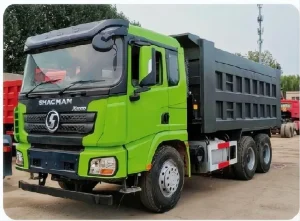
A second product reference such as the SHACMAN 6×4 dump truck demonstrates why brand and configuration must stay visible in the parts plan. Similar fleet duties do not prove cross-brand part compatibility.
For tipping-related operating context, buyers can also review what can slow a dump truck’s tipping cycle under full load. Maintenance teams should keep process symptoms, hydraulic condition and vehicle configuration connected rather than treating every slow cycle as a single-component fault.
Scenario: A First Export Fleet Faces Long Replenishment Times
Representative scenario — not a claimed Wentu customer case.
Business Background: A quarry operator imports its first mixed dump-truck fleet for a remote site. Trucks work long daily hours on dusty haul roads, and international spare-parts replenishment can take weeks.
Problem: The initial order includes a large generic spare-parts package, but several items do not match the final delivered configurations. Meanwhile, a low-cost electrical or hydraulic component that can immobilize a truck was not included because it was absent from the generic list.
Cause: The buyer selected spares by brand and quantity rather than by vehicle build data, duty cycle, local repair capability, failure consequence and lead time.
Solution: The fleet creates a configuration register for every truck, separates routine consumables from failure-critical items, confirms local diagnostic capability, and asks the supplier to map proposed spares to vehicle identifiers and parts references. The first-shipment package is then adjusted around the actual fleet and replenishment risk.
Buyer Decision Value: The buyer spends the spare-parts budget on identifiable, usable stock instead of maximizing the number of boxes shipped with the trucks.
What Should Be Included in the Commissioning Acceptance Pack?
Spare parts should be linked to commissioning evidence. The buyer should be able to confirm which trucks were delivered, which configuration each truck uses, which spare belongs to which vehicle family, and which documents support maintenance after handover.
| Commissioning Item | Buyer Evidence to Request | Acceptance Question |
| Vehicle configuration | Model/build record plus key powertrain and axle identifiers | Can every truck be distinguished from visually similar units? |
| Spare-parts package | Part number, description, applicable vehicle/configuration and quantity | Can receiving staff trace each spare to the delivered fleet? |
| Maintenance documents | Manuals, parts catalog, wiring/hydraulic information where applicable | Can the workshop identify service tasks and fault paths without relying on memory? |
| Diagnostic readiness | Required tools, software/access, adapters and support route | Can local technicians isolate common faults before ordering parts? |
| Warranty / support | Claim route, evidence requirements, contact point and exclusions | Does the owner know what to record before dismantling or replacing a failed part? |
What Should Buyers Put in a Dump Truck Maintenance RFQ?
The RFQ should provide truck model and build configuration, engine/transmission/axle identifiers when known, fleet quantity, annual operating hours, hauled material, road and gradient conditions, climate, local service capability, diagnostic tools, target replenishment lead time, desired consumables coverage period, critical-spares policy, document requirements, warranty expectations, commissioning scope and destination.
Ask the supplier to identify assumptions and exclusions. If spare quantities are recommended, request the basis—fleet size, duty, service interval evidence, lead time or criticality—rather than accepting a universal number.
Frequently Asked Questions
How many spare parts should be ordered with a new dump truck fleet?
There is no safe universal quantity. Stock should be calculated from fleet size, operating hours, duty, local repair capability, failure consequence, replenishment lead time and the exact vehicle configuration.
Should the buyer order the same spares for HOWO, SHACMAN and FAW dump trucks?
Not automatically. Similar duty does not prove part interchangeability. Use the delivered vehicle configuration and verified part references before combining stock across brands or models.
Which documents are most important for future parts identification?
Vehicle/build identification, parts catalog information, engine/transmission/axle identifiers, maintenance manuals, wiring or hydraulic information where applicable, and a spare-parts list mapped to the delivered vehicles are especially useful.
What is the difference between a consumable and a critical spare?
A consumable is normally planned around recurring service or wear. A critical spare is stocked because its failure can stop or restrict the truck and replacement may take too long to obtain.
Should braking or steering parts be treated as interchangeable?
No assumption should be made without vehicle-specific evidence. Safety-related parts should be matched to the exact system, configuration and applicable technical requirement.
How should remote sites plan diagnostic tools?
Start with the faults local technicians are expected to isolate and the systems installed on the trucks. Confirm the necessary tools, documentation, adapters and support access before commissioning.
What should be sent to Wentu for a maintenance-spares quotation?
Send the truck configuration, fleet size, operating hours, duty conditions, service capability, desired stocking period, replenishment target, critical-spares policy, document needs, commissioning scope and destination.
Request a Fleet-Specific Maintenance and Spares Review
For a first-shipment maintenance package, send Wentu the truck models and build configurations, fleet quantity, operating hours, haul conditions, local workshop capability, diagnostic resources, replenishment target, required manuals and drawings, commissioning scope and spare-parts policy through the Contact Us page. Wentu can review the available dump-truck configurations and help organize a quotation around identifiable consumables, critical-spares families, documentation and project-specific support requirements without assuming one universal list fits every fleet.