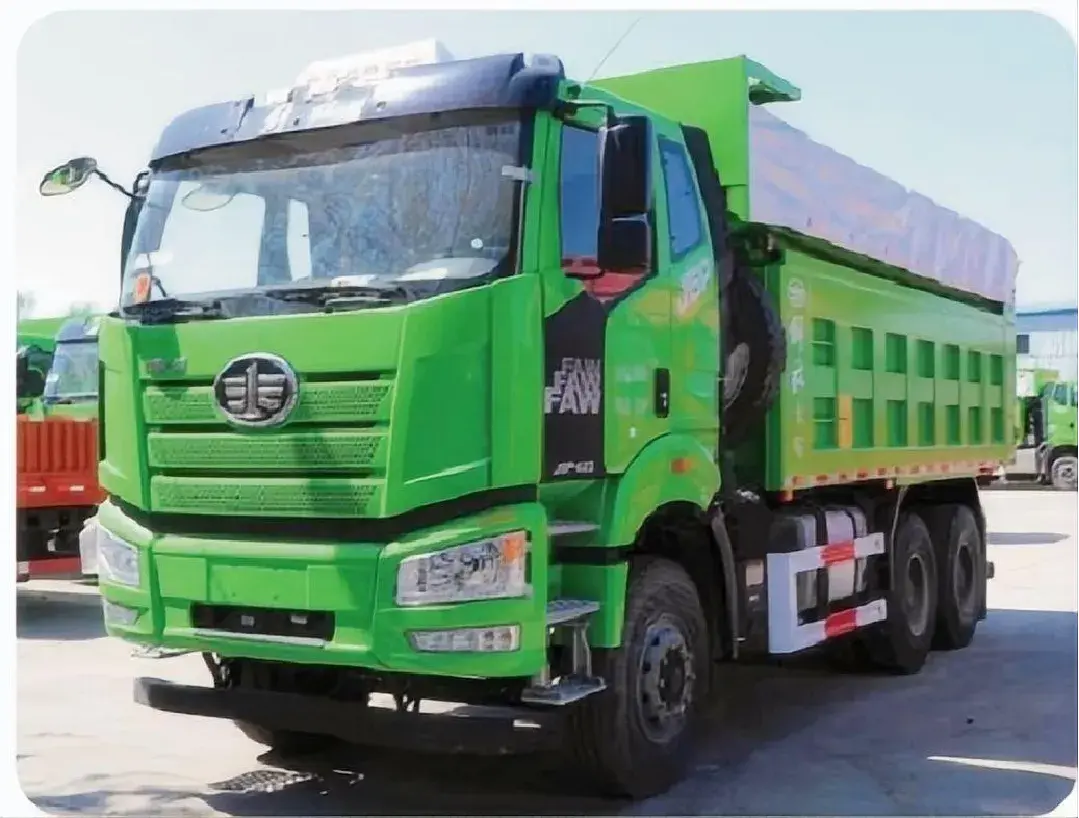
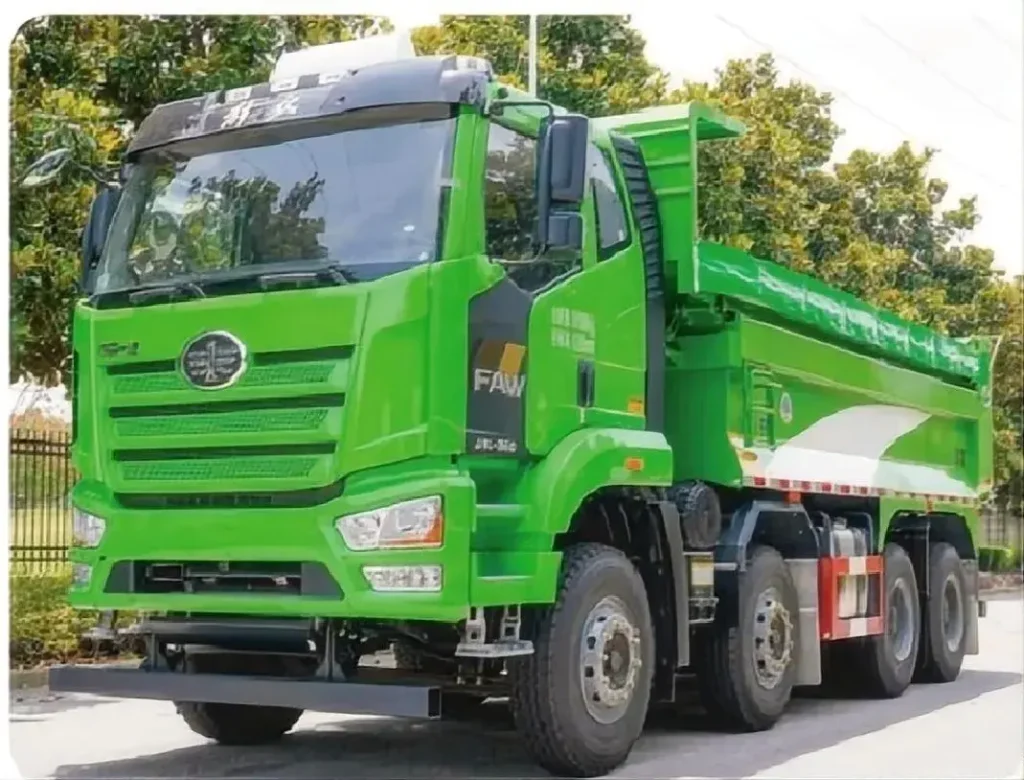
The question sounds simple, but the answer depends on what kind of “1 ton dump truck” you mean. The phrase is used for two very different vehicles: a light-duty 1-ton class pickup fitted with a dump body, and a compact mini dumper rated to carry one metric ton. They have different payloads, different bed sizes, and different jobs.
This guide explains what “1 ton” really means, how much a
1 ton dump truck can hold in both weight and volume, and why the material you carry often matters more than the size of the bed.
What Does “1 Ton” Actually Mean?
The name is a legacy from the early days of pickup trucks, when a “1-ton” truck was rated to carry roughly one short ton — 2,000 pounds. Today, the term survives mainly as a class name for heavy-duty pickups such as the Ford F-350, Chevrolet Silverado 3500 and Ram 3500.
Here is the important part: modern 1-ton pickups carry far more than one ton. Depending on the configuration — cab size, bed length, engine, and especially single rear wheels (SRW) versus dual rear wheels (DRW) — payload ratings range from roughly 3,500 to over 7,000 pounds. Dual-rear-wheel versions are the heavy hitters, with ratings often between 6,000 and 7,900 pounds.
There is a second, more literal meaning. Compact mini dumpers sold for construction, landscaping and agricultural work are often marketed as “1 ton dump trucks” because their rated load is exactly 1,000 kg — one metric ton (about 2,200 pounds). These small machines typically carry that load in a bucket of about 0.5 to 1 cubic metre.
Two Common Kinds of “1 Ton Dump Truck”
| | 1-Ton class pickup with dump body | Mini dumper (“1 ton”) |
| Payload rating | ~3,500–7,000+ lb (up to ~7,900 lb DRW) | ~1,000 kg (≈2,200 lb) |
| Bed / bucket volume | ~2–3 cubic yards (up to ~4 with aftermarket bodies) | ~0.5–1 cubic metre |
| Typical use | Contractor, farm and small-site hauling | Tight sites, landscaping, agriculture, tunneling |
| Power and speed | Full-size truck, road speed | Small diesel or petrol engine, low speed, high mobility |
Both are real products, but they answer very different needs. When buyers search for a “1 ton dump truck,” they usually mean one of the two — which is why the specification sheet matters more than the name.
How Much Can It Hold in Weight and Volume?
For any dump truck, two numbers define capacity:
- Payload (weight). The maximum weight of cargo and passengers the truck is legally designed to carry. It is calculated as the Gross Vehicle Weight Rating (GVWR) minus the curb weight of the truck itself. The real number for your specific truck is printed on the manufacturer’s door sticker or nameplate.
- Bed volume. How much material fits in the body, usually measured in cubic yards (US) or cubic metres (metric). A typical long-bed 1-ton pickup holds roughly 3 cubic yards level, and aftermarket dump bodies can reach 4 cubic yards or more. Mini dumpers are typically rated at 0.5–1 cubic metre.
The catch is that you can rarely fill the bed completely. Whether you hit the weight limit or the volume limit first depends entirely on what you are hauling.
Material Weight Matters More Than Bed Size
Bulk materials have very different densities, and dense materials will reach the payload limit long before the bed looks full:
| Material (loose, dry) | Approx. weight per cubic yard | Approx. weight per cubic metre |
| Mulch / bark | 400–800 lb (about 700 lb typical) | 240–480 kg |
| Topsoil | about 2,200 lb | about 1,300 kg |
| Sand (dry) | 2,400–2,700 lb | 1,400–1,600 kg |
| Gravel / crushed stone | 2,700–2,800 lb | 1,600–1,700 kg |
A quick example shows how this works. With a 3-cubic-yard bed and a 3,500-pound payload rating:
- Mulch — about 700 lb per yard. Three yards weigh about 2,100 lb, so you can fill the bed.
- Topsoil — about 2,200 lb per yard. Only about 1.6 yards fit before you reach 3,500 lb.
- Gravel — about 2,700 lb per yard. Only about 1.3 yards fit before you are at the limit.
With a 7,000-pound payload (typical of a dual-rear-wheel 1-ton truck), you can carry roughly 2.5 yards of gravel, 3 yards of topsoil, or a full bed of mulch — but even then, wet materials are heavier than dry ones, and a wet load can quickly push you past the rating.
How to Calculate What Your Truck Can Carry
Follow these steps before loading a 1 ton dump truck:
- Find the payload rating. Read the GVWR and payload figures on the door sticker or nameplate of the specific truck. Do not rely on a brochure — options, cab configuration and wheels change the number.
- Weigh or estimate the material. Multiply the bed volume in cubic yards by the material density per cubic yard. When in doubt, use the wet or compacted figure.
- Account for everything else. Passengers, tools, tie-downs, the dump body kit itself and the trailer tongue weight all count against payload.
- Respect axle ratings. A payload figure applies to the whole truck; the front and rear axle ratings are separate and can be exceeded even when the total is fine.
- Leave a safety margin. Loading to 100% of the rating leaves no room for wet material, scale error or an unexpected load shift.
Overloading is not just a legal risk — it degrades brakes, steering, tires and suspension, and it voids warranty claims. The correct answer to “how much can it hold” is always “as much as the rating sticker says — minus a safety margin.”
Why Buyers of Dump Trucks Should Work with a Manufacturer
Whether you need a light-duty dump body for a 1-ton class truck or a heavy-duty dump truck for production hauling, buying from a manufacturer rather than a reseller gives you control over the specification. Jining Juxiang Automotive Technology Co., Ltd., based in Liangshan County Industrial Park, Jining City, Shandong Province, is a manufacturer and exporter with more than 20 years of experience in the industry. The company owns three modernized factories and specializes in the production and export of tractor dump trucks, semi-trailers and engineering machinery, with a product line that includes HOWO 4×2, 6×4, 6×6 and 8×4 dump trucks.
As a source manufacturer, Juxiang applies strict quality control throughout production and offers customized services — from chassis configuration and dump body sizing to export documentation — backed by rich experience shipping construction machinery to international markets. For buyers planning a purchase, this means the payload rating, bed volume and configuration can be matched to the actual materials and site conditions, rather than settled from a stock list.
Conclusion
How much can a 1 ton dump truck hold? It depends on which truck you mean. A 1-ton class pickup with a dump body typically carries 3,500 to more than 7,000 pounds in a bed of roughly 2–3 cubic yards, while a compact 1-ton mini dumper carries about 2,200 pounds in a small bucket. In every case, the material you haul — mulch, topsoil, sand or gravel — decides whether you run out of volume first or weight first, and the sticker on the truck’s door is the final authority.
If you are in the market for a dump truck and want a configuration matched to your payload needs, our team can help you compare models and specifications. Contact Juxiang to discuss your requirements —
contact us for pricing and customization.
Frequently Asked Questions
How much can a 1 ton dump truck hold?
A 1-ton class pickup truck with a dump body typically carries 3,500 to over 7,000 pounds of payload in a bed of about 2–3 cubic yards. A compact “1 ton” mini dumper carries about 1,000 kg (2,200 lb) in a bucket of roughly 0.5–1 cubic metre.
Is a 1-ton truck really limited to one ton?
No. “1 ton” is a legacy class name. Modern 1-ton pickups carry several times that amount, with dual-rear-wheel versions rated from about 6,000 to 7,900 pounds.
How many cubic yards can a 1-ton dump truck bed hold?
A typical long-bed pickup dump body holds about 3 cubic yards level, with aftermarket bodies reaching up to about 4 cubic yards. Mini dumpers are usually rated in cubic metres — around 0.5–1 m³.
Can a 1-ton dump truck carry a full load of gravel?
Rarely. Gravel weighs about 2,700–2,800 lb per cubic yard, so a 3,500-lb payload allows only about 1.3 yards of gravel. Dense materials hit the weight limit long before the bed is full.
Where can I find the real payload rating?
On the driver’s door sticker or the vehicle nameplate. The payload is the GVWR minus the truck’s curb weight, and it varies by configuration — never guess from a brochure.