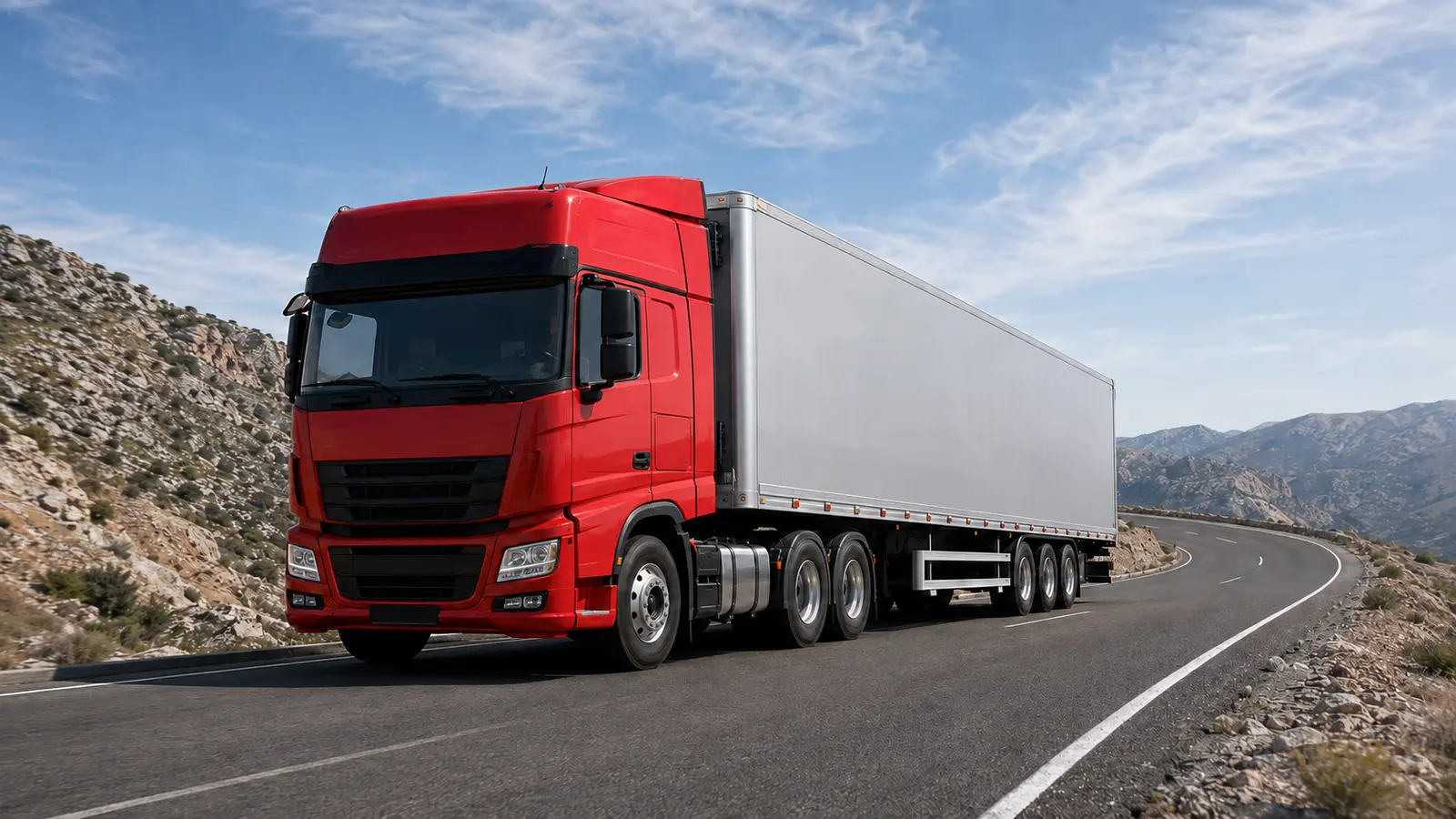
Direct Answer: Select a tractor truck only after defining the trailer, loaded combination mass, axle loads, coupling height, route grades, road surface, operating speed and service network. Engine power alone does not identify the right truck. Buyers should match axle configuration, traction, gearbox and axle ratio, braking, suspension, tires, fuel system, cab and spare-parts plan to the complete transport duty.
Export buyers often receive quotations for several tractor models with different headline power and drive layouts. The figures are easy to compare; the operating consequences are not. A tractor that performs well on paved long-haul routes may be poorly matched to low-speed quarry work, repeated steep grades or a trailer with a different coupling and load distribution. The selection process should begin with the transport task.
Why Should the Trailer Be Specified Before the Tractor?
The trailer determines much of the tractor’s working condition. Its loaded mass, kingpin load, fifth-wheel height, air and electrical interfaces, braking system and turning envelope define mechanical and regulatory constraints. A tractor cannot be evaluated accurately while the trailer remains a generic description.
Start with the intended trailer type, approved payload and load distribution. Then calculate or verify the gross combination mass for the target market and route. Confirm that tractor, trailer, coupling and tires are each suitable for the resulting loads. The lowest rating in the combination can become the operational limit.
Buyers can review Wentu’s tractor truck product category after these inputs are available. Product families and axle layouts are useful filters, but the final configuration must be tied to the specific trailer and transport cycle.
How Do Route Grade and Surface Affect the Driveline?
A route profile should identify maximum and sustained grades, elevation, road surface, tight turns, expected speed, stop frequency and restart conditions. Short steep ramps and long mountain climbs create different requirements. Loose mine roads and paved highways also place different priorities on traction, gearing, suspension and tire selection.
Engine power is only part of gradeability. Available torque, gearbox ratios, final-drive ratio, tire rolling radius, loaded combination mass and driveline efficiency work together. A lower overall gearing approach can support startability and low-speed control but may raise engine speed at cruise. Taller gearing can favor highway operation while being less suitable for repeated low-speed heavy starts. Buyers should request a route-based driveline calculation rather than selecting the largest power figure.
Retarding and service-brake capacity must be evaluated for loaded descents. The applicable system, cooling condition and driver procedure depend on the truck and market. The RFQ should state the longest descent, gradient, operating mass and speed assumptions so the supplier can explain the proposed braking configuration and any operating limits.
When Should Buyers Compare 4×2 and 6×4 Tractor Trucks?
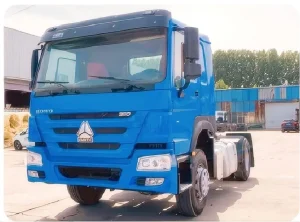
A 4×2 tractor can offer a simpler and potentially lighter route for suitable road freight, while a 6×4 tractor provides two driven rear axles and is commonly considered where traction, rough surfaces or heavier duty are central. Neither layout is universally better. Legal axle-load rules, required kingpin load, tire count, turning behavior, fuel use and maintenance all affect the decision.
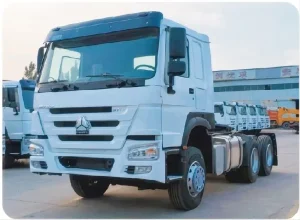
Wentu lists both a HOWO 4×2 tractor truck configuration and a HOWO 6×4 tractor truck configuration. These pages provide concrete product routes for an RFQ, but the axle choice should be justified by the buyer’s load distribution, road surface and traction requirement rather than copied from another fleet.
One hidden cost appears when a buyer selects additional driven axles “for safety” without measuring whether the route needs them. The result may be unnecessary tare mass, tires and maintenance. The opposite mistake is selecting a highway-oriented layout for a wet, loose or steep site and then attempting to solve traction problems through driver technique.
Which Tractor Configuration Variables Should Be Compared?
| Decision area | Input from buyer | Configuration to verify | Operational risk |
| Trailer match | Kingpin, fifth-wheel height, loaded kingpin load and connections | Coupling, frame clearance, air/electrical interface | Interference, poor load transfer or incompatible systems |
| Combination mass | Legal and working mass by market and route | Axle ratings, tires, frame, driveline and brakes | Overload or unapproved operation |
| Route topography | Grade, altitude, speed, stops and descent profile | Engine, gearbox, final drive, cooling and retarding | Poor startability, high fuel use or brake stress |
| Surface and traction | Paved, gravel, mud, quarry or mixed route | Drive layout, differential strategy, suspension and tires | Wheel spin, immobilization or accelerated wear |
| Duty pattern | Daily distance, shifts, idle time and loading queues | Fuel capacity, cab, maintenance interval and thermal duty | Lost operating time or unsuitable driver environment |
| Market support | Local fuel, emissions rules, diagnostic and parts access | Engine version, aftertreatment, filters and spare package | Registration delay or prolonged downtime |
The table helps procurement collect comparable quotations. It does not replace engineering approval or local compliance review. Each supplier should state assumptions, rated limits, included equipment and requested buyer decisions. Unstated assumptions usually reappear later as cost, modification or operating restrictions.
How Should Fuel Type and Local Infrastructure Be Evaluated?
Fuel choice must match local availability, quality, storage, route coverage, maintenance capability and regulatory requirements. A lower fuel price at one depot does not prove whole-route suitability. Buyers should map refueling locations, expected consumption range, seasonal supply and recovery options before selecting a fuel system.
For gas-fueled tractors, infrastructure and workshop competence become part of vehicle availability. Wentu’s CNG tractor truck option represents one catalog-supported route. A buyer considering it should confirm local CNG supply, tank and vehicle requirements, route autonomy, maintenance training and market approval. The website also lists an LNG tractor product, but the unusual source spelling and limited verified details make it prudent to request a controlled model specification before placing an order.
Diesel specifications also vary by market. Fuel quality, emissions level and aftertreatment configuration should be stated clearly. A vehicle configured for one regulatory environment may require different documentation, consumables or service tools in another. Never treat “same engine family” as proof that two market versions are operationally identical.
What Cab and Chassis Choices Affect Fleet Productivity?
Cab selection should reflect shift length, overnight operation, climate, crew size and road condition. A sleeper cab may be justified on long-haul work but can add mass and cost to short shuttle cycles. Air conditioning, heating, seat, visibility, storage and access should be evaluated as work requirements rather than decorative options.
Fuel-tank position, battery box, exhaust treatment, spare wheel and other chassis equipment can influence fifth-wheel clearance and maintenance access. Request a layout drawing for the intended tractor version and trailer. Turning and articulation checks should cover the real trailer front profile, landing gear and fitted accessories.
Tires should be selected by axle load, speed, surface, climate and local availability. A size that is common at the factory may be difficult to replace in the operating region. Aligning tire sizes across a fleet can reduce inventory, but that benefit must be balanced against axle and traction requirements.
How Can Buyers Reduce Spare-Parts and Downtime Risk?
Parts planning begins before shipment. Ask for the exact engine, gearbox, axle, brake, filter and electronic-control identities in the approved build. The supplier should distinguish routine service items, recommended commissioning spares and longer-lead components. Generic statements such as “parts are widely available” are less useful than an itemized list with part numbers.
Check who can diagnose the vehicle in the destination market and what software, cables or training are required. A truck can be mechanically repairable yet remain idle because the fleet cannot identify a fault or obtain a small electronic component. The service plan should cover normal maintenance, warranty communication, evidence required for a claim and technical escalation.
Another recurring procurement issue is ordering a mixed fleet with several engine or axle variants to gain small price advantages. The apparent saving can create extra filters, tools, training and stock. Where duties are similar, controlled configuration commonality may have more value than a marginal unit-price difference.
What Should Be Verified During Sample and Pre-Shipment Approval?
Compare the vehicle identification and installed configuration with the approved order. Verify model and component identities, axle layout, tires, fifth wheel, connections, fuel tanks, cab options, braking equipment, supplied tools, spare parts and documents. Inspect critical dimensions that affect the trailer interface.
A static inspection cannot demonstrate every route condition. Conduct an agreed functional check and, where practical, a representative coupling and maneuvering trial with the intended trailer or verified interface data. Record any software settings or operating limitations supplied with the vehicle. The buyer should define acceptance criteria before the truck is completed, not after it reaches the port.
Document control matters across fleet orders. Freeze the approved specification and create a deviation process. If a component becomes unavailable, the replacement should be technically reviewed for rating, interface, serviceability and local support before installation. A substitution described as “equivalent” should be supported by evidence.
Representative Scenario: Tractor Selection for a Mixed Route
Representative scenario — not a claimed customer case.
Business Background: A regional hauler needs tractors for loaded semi-trailers moving from a quarry access road to a paved highway and then to a port.
Problem: The fleet compares tractors mainly by engine power. One quotation offers a highway-oriented 4×2 layout; another offers a 6×4 with different gearing and tires.
Cause: The RFQ does not state the gravel approach, wet-season traction, maximum restart grade, loaded combination mass, highway distance or available tire and parts support.
Solution: Operations separates the route into site and highway segments, records mass and grade conditions, and provides the trailer coupling data. Suppliers return the proposed drive layout, ratio, tire, braking and cooling logic with local-service requirements. Procurement compares fuel and maintenance implications alongside route capability.
Buyer Decision Value: The fleet chooses a configuration through a documented trade-off instead of assuming that more power or more driven axles automatically produces the lowest transport cost.
What Information Should a Tractor Truck RFQ Include?
- Destination country, registration category, emissions requirement and applicable mass limits
- Trailer type, loaded mass, kingpin load, fifth-wheel height and connection details
- Route distance, maximum and sustained grade, altitude, road surface and speed range
- Stops per cycle, starts on grade, shifts, idle time and annual distance
- Required drive layout and the operating reason, or a request for supplier recommendation
- Fuel type, local fuel quality, refueling network and required tank range
- Cab type, climate equipment, driver accommodation and safety requirements
- Tire size preference, local replacement availability and suspension expectations
- Inspection, documentation, spare parts, diagnostic support, quantity and delivery point
Attach the trailer interface drawing and a route profile. Wentu’s tractor truck project inquiry can then be used for a configuration and quotation review based on the intended transport duty.
Frequently Asked Questions About Tractor Truck Selection
Is engine horsepower the main tractor truck selection factor?
No. Loaded combination mass, route grade, gearing, traction, cooling, braking and operating speed determine how the available power can be used.
Does a 6×4 tractor always outperform a 4×2?
No. A 6×4 offers additional driven-axle traction, while a 4×2 may suit suitable paved duties with different tare, tire and maintenance priorities. Route and load data should decide.
Why does fifth-wheel height matter?
Fifth-wheel height affects trailer attitude, coupling geometry and clearance. The tractor and trailer drawings should be checked together before shipment.
How should buyers choose an axle ratio?
Choose it as part of the complete driveline using tire size, gearbox, loaded mass, startability, grade and cruise-speed requirements. A single ratio is not optimal for every route.
What spare parts should ship with a tractor fleet?
The package should reflect fleet size, duty, service intervals and local availability. Request an itemized recommendation covering routine consumables and critical longer-lead parts.
Can a tractor be ordered before the trailer is finalized?
It is risky. At minimum, freeze the trailer’s mass, kingpin load, coupling height, front clearance, braking and electrical interfaces before approving the tractor build.
What supplier evidence is most useful for comparison?
Request a controlled specification, layout, component list, rated masses, route-based driveline explanation, compliance documents, inspection plan and a clear list of deviations.