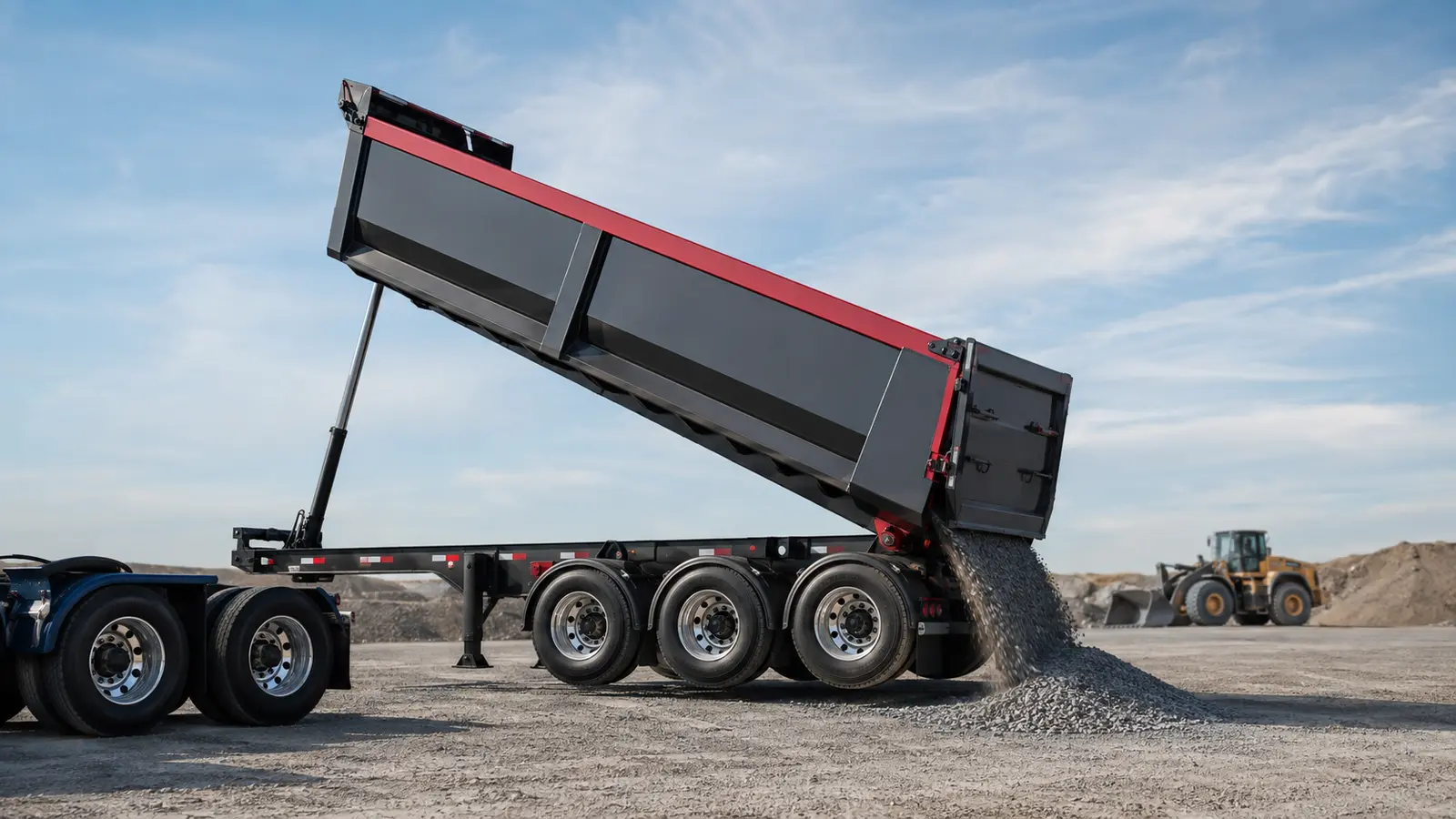
Direct Answer: Match a dump semi-trailer to the material density, legal payload, loading method, road condition, cycle distance, unloading surface, tractor and coupling dimensions. Body volume alone cannot identify the right configuration. Buyers should define the complete operating cycle, then confirm chassis, axle, tire, suspension, hydraulic lifting, body and braking requirements before approving a quotation.
A dump trailer for semi truck operations is part of a transport system, not an isolated container. The same trailer can behave very differently when it moves wet ore on rough mine roads, dry aggregate between a quarry and port, or demolition material through restricted construction sites. A useful RFQ therefore starts with the work the combination must complete—not with a body volume copied from another project.
What Should Buyers Define Before Choosing a Dump Semi-Trailer?
Begin with one representative haul cycle. Record the loading point, material, one-way distance, road surface, maximum grade, travel speed, queue time, unloading area and expected cycles per shift. Add the tractor model and the legal mass and dimension limits in the destination market. These inputs establish the boundary for configuration discussions.
Wentu’s semi-trailer product range covers several transport applications. For a tipper project, the product family is only the first filter. A buyer still needs to define how the body will be loaded, carried and raised, and whether the complete tractor-trailer combination can work safely within the site.
A common procurement mistake is to send only “three-axle dump trailer” and a target cubic volume. Suppliers can then quote visibly similar trailers with different steel selections, lift arrangements, axle ratings, suspension, tires, braking components and body structures. Price comparison is meaningless until the technical boundary is shared.
How Do Material Density and Loading Method Change the Body Choice?
Body volume must be checked against bulk density and the legal or approved payload. Dense material can reach the mass limit before filling a large body. Low-density material may need more volume, but a taller or longer body affects center of gravity, loading accuracy, tare weight and unloading stability. Moisture variation also matters for soil, sand, ore and other bulk materials.
Describe the material rather than using only “bulk cargo.” State whether it is abrasive, sticky, wet, corrosive, sharp-edged, prone to bridging or supplied in large lumps. Loader bucket size, drop height and loading distribution help the supplier evaluate floor, sidewall and top-rail exposure. If material regularly strikes one zone, localized structural demand may be more important than nominal body capacity.
The buyer should also state how the trailer will be loaded. An excavator, wheel loader, hopper or conveyor creates different impact and dimensional constraints. Sidewall height must suit the loading equipment. Overfilling, uneven loading and material piled above the designed envelope should not be treated as normal operating conditions.
Which Unloading Conditions Control the Lifting Configuration?
The unloading site is often the decisive factor. Record available length and height, overhead lines or structures, cross-slope, ground bearing condition, wind exposure and whether the tractor can remain straight with the trailer. A trailer that can raise on a level demonstration pad may be unsuitable for a congested or uneven work area.
The catalog-supported dump semi-trailer configuration includes alternative hydraulic lifting arrangements and body forms. The correct route should be confirmed against the required body geometry, material discharge behavior and available unloading envelope. Hydraulic layout, hinge arrangement, subframe and body structure should be reviewed as one lifting system.
Sticky material can remain attached to one side and create an uneven load during tipping. Fine material may require attention to tailgate sealing. Large rocks can damage the floor or obstruct discharge. These are operating inputs, not optional details. Buyers should ask how the proposed configuration addresses the actual material and should define a controlled unloading trial where project risk warrants it.
How Should the Trailer Match the Tractor and Route?
The tractor and trailer must be checked as a combination. Confirm fifth-wheel height, kingpin specification, landing-gear clearance, turning clearance, air and electrical connections, brake compatibility and load distribution at the coupling and trailer axles. Do not assume that a familiar tractor model guarantees a correct match; market versions and fitted equipment can differ.
Route data affects the power unit as well as the trailer. Steep grades, loose surfaces and frequent starts may require a different traction and gearing approach from long-distance paved haulage. Buyers reviewing available tractor truck configurations should provide the loaded combination mass, route profile and coupling details so the power unit and dump trailer are not selected independently.
Axle spacing and load distribution influence legal compliance and component loading. The buyer should calculate the expected kingpin and axle loads for the intended payload and loading position, then compare them with both legal limits and the approved technical ratings. A body that is loaded too far forward or rearward can create a problem even when total cargo mass appears acceptable.
Which Configuration Variables Belong in the Decision Table?
| Operating input |
Configuration decision |
Buyer evidence |
Risk if omitted |
| Material and density range |
Body volume, geometry, floor and sidewall approach |
Material description, density range and loading photos |
Overweight loads or unusable volume |
| Loading equipment |
Side height, opening size and impact protection |
Bucket or hopper dimensions and drop height |
Slow loading or localized body damage |
| Unloading area |
Lift arrangement, body form, tailgate and raised envelope |
Site plan, surface condition and clearance dimensions |
Unstable or obstructed tipping |
| Route and cycle |
Axles, suspension, tires, braking and structural duty |
Distance, grade, surface, speed and cycles per shift |
Premature wear or poor cycle productivity |
| Tractor interface |
Kingpin, fifth-wheel height, coupling load and connections |
Tractor data sheet and coupling drawing |
Interference or incorrect load distribution |
| Destination rules |
Permitted mass, dimensions, braking and required documents |
Market regulation and registration checklist |
Vehicle cannot be registered or operated as planned |
A supplier quotation should respond to these inputs with a defined configuration, exclusions and approval documents. If two quotations use different assumptions, normalize them before comparing price. The lowest initial price may omit a required component, use a different duty level or shift technical responsibility back to the buyer.
What Should Buyers Inspect Before Shipment?
Inspection should follow the approved drawing and purchase specification. Verify overall and interface dimensions, body geometry, axle and tire identification, suspension arrangement, brake and electrical connections, landing gear, hydraulic components, weld and finish requirements, labels and supplied accessories. The inspection plan should distinguish visual checks from dimensional and functional checks.
A lifting test should confirm controlled movement, alignment, hydraulic operation and body seating under an agreed test condition. A no-load demonstration cannot by itself predict performance with every cargo. Where loading behavior is critical, define the safe and permitted test method with the manufacturer and the project engineer rather than improvising a full-load tip test at shipment.
Inspect the tailgate, locking arrangement and contact surfaces for the intended material. Confirm that transport locks, hoses, electrical connectors and loose accessories are secured for export shipment. Packaging and shipping method should protect exposed components while remaining compatible with the selected transport route.
Another frequent issue is approving the prototype but not freezing change control. The purchase order should state which drawings, component identities and critical characteristics cannot change without buyer approval. Otherwise a later production batch can pass a general description while differing from the evaluated sample.
How Should Buyers Compare Purchase Price and Cycle Cost?
Evaluate cost per completed haul rather than trailer price alone. Tare mass, legal payload, loading time, discharge time, cleaning, tire wear, hydraulic maintenance, empty return distance and unplanned downtime all influence the business result. A larger body may add no revenue if density makes the combination overweight before the body is full.
Standardized components can simplify parts planning, but only when they meet the duty and local service environment. A specialized configuration may reduce material carryback or unloading delay, yet it can increase tare weight or parts complexity. Procurement should show these trade-offs to operations and maintenance before the specification is released.
Wentu’s earlier discussion of semi-trailer operating profitability provides broader cost context. For a dump trailer project, the useful next step is to replace generic efficiency assumptions with the buyer’s real route, payload and cycle data.
Representative Scenario: Aggregate Haulage with Restricted Unloading Space
Representative scenario — not a claimed customer case.
Business Background: A contractor plans to move aggregate from a crushing site to a storage yard using a semi-trailer combination.
Problem: The first RFQ requests a large-volume dump semi-trailer, but the receiving yard has limited overhead clearance and a slightly uneven unloading lane.
Cause: The buyer selected body volume from the daily tonnage target without checking material density, raised-body envelope, ground condition or tractor coupling height.
Solution: The project team records the density range, legal combination mass, loader bucket, route grade, coupling dimensions and unloading clearances. Suppliers are asked to return a layout showing body capacity, load distribution and raised envelope. The buyer then reviews site preparation and operating controls alongside the trailer configuration.
Buyer Decision Value: The revised process prevents a visually impressive trailer from being approved before the unloading site and complete combination are proven compatible.
What Information Should a Dump Trailer RFQ Include?
- Material name, density range, moisture, abrasiveness, particle size and sticking tendency
- Target payload and the destination market’s legal mass and dimension limits
- Loading equipment, bucket or hopper dimensions, drop height and loading time target
- Route distance, surface, maximum grade, expected speed and cycles per shift
- Unloading surface, available length and height, cross-slope and nearby obstacles
- Tractor model, fifth-wheel height, kingpin and connection requirements
- Preferred body form, lifting arrangement, tailgate function and material-discharge concerns
- Axle, suspension, tire, braking, electrical and spare-parts expectations
- Inspection, documentation, shipping, quantity and delivery-destination requirements
Send the haul-cycle sheet with the tractor data and unloading-site dimensions. Through the commercial vehicle configuration inquiry, buyers can request a proposal based on the real application rather than a generic body-volume quote.
Frequently Asked Questions About Dump Semi-Trailers
Is a larger dump trailer body always more productive?
No. Dense material may reach the legal or technical mass limit before the body is full. Productivity depends on legal payload, cycle time, loading, discharge and route conditions.
Why must the unloading surface be included in the RFQ?
A raised body creates a demanding stability condition. Surface level, bearing capacity, cross-slope, wind and overhead clearance influence whether the proposed unloading method is appropriate.
Can one dump semi-trailer carry ore, sand and demolition material?
A configuration may handle more than one material, but density, abrasion, lump size, moisture and discharge behavior must be checked for every intended cargo. The most demanding case should control the specification.
What tractor information does the trailer supplier need?
Provide the tractor model and market version, fifth-wheel height, coupling and connection details, permitted coupling load, axle configuration and a technical data sheet or interface drawing.
Should buyers specify components by brand?
Specify the required function, rating, market support and approval evidence first. A named brand can help standardize a fleet, but the exact model and compatibility still need confirmation.
How should two dump trailer quotations be compared?
Use the same payload, material, route, tractor interface, component scope, inspection, documentation and delivery boundary. List deviations separately instead of comparing only body volume and price.