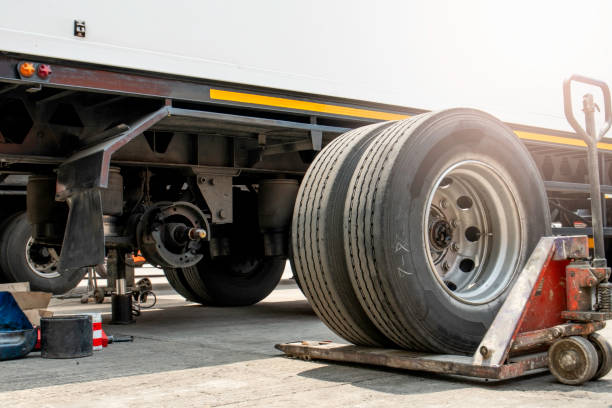
For global logistics, freight forwarding, and bulk transport companies, the semi-trailer is the backbone of the fleet. Choosing the right trailer dictates your operational capacity, compliance success, and ultimately, your profit margin. Our comprehensive guide focuses on the five critical factors that ensure your trailer investment delivers maximum return across diverse international markets.
1. Versatility Defined: Selecting the Right Semi-Trailer for Your Export Cargo
The first step in procurement is matching the trailer type to your typical cargo and operational environment. Versatility minimizes fleet overhead and maximizes utility.
- Flatbed Trailers: The ultimate versatile workhorse, ideal for shipping construction materials, machinery, and non-standardized loads. Their open design simplifies side-loading and unloading.
- Skeletal Trailers (Skeletal/Container Chassis): Specifically designed for carrying ISO shipping containers (20ft, 40ft, 45ft). Their stripped-down design ensures minimum weight and maximum legal container capacity.
- Lowboy/Low-bed Trailers: Essential for transporting oversized or heavy equipment, such as excavators and industrial components, where height clearance is a major factor.
- Box Van Trailers: Used for high-security, weather-sensitive goods, offering protection from the elements and pilferage.
We provide expert consultation to tailor your trailer mix for maximum flexibility and efficiency across various cargo types.
2. Engineering for Profit: How Lightweight Steel Increases Your Net Payload
Every kilogram saved in the trailer's tare weight (empty weight) translates directly into increased cargo capacity and higher revenue per trip. This focus is an economic imperative.
- High-Tensile Lightweight Steel: We utilize advanced, high-tensile steel in the main beams and frame construction. This material provides superior strength and rigidity compared to traditional steel, allowing for a thinner, lighter structure without compromising structural integrity or long-term durability.
- Payload Maximization: By optimizing the trailer's design for minimal tare weight, our customers gain a competitive edge by carrying more product within legal gross vehicle weight (GVW) limits, maximizing the revenue earned on every haul.
The result: Reduced fuel consumption per ton of freight and a healthier bottom line.
3. Global Compatibility: Ensuring Semi-Trailer Coupling Meets International Standards
When exporting globally, interoperability with various tractor brands is crucial. Non-compliant coupling dimensions can lead to expensive modifications or operational failure.
- Kingpin Size and Rating: We strictly adhere to international standards (e.g., SAE/DIN) for 2-inch (50#) and 3.5-inch (90#) kingpins, ensuring safe and legal connection to any standardized fifth wheel.
- Coupling Height Consistency: The standard coupling height must be precisely engineered to match common international tractor specifications, guaranteeing stable, level hauling and preventing undue stress on the coupling mechanism.
- Regulatory Documentation: We provide all necessary technical specifications and compliance certificates to ensure quick and seamless integration into global logistics operations.
4. Safety First: The Latest in Semi-Trailer Braking and Stability Systems
Safety is non-negotiable, particularly when hauling heavy or sensitive loads. Modern trailer technology ensures predictable and stable braking performance, even in challenging conditions.
- Mandatory ABS Systems: All our trailers include Anti-lock Braking Systems (ABS) as standard, preventing wheel lockup and maintaining steering control during hard braking.
- Optional EBS Integration (Electronic Braking System): For enhanced safety and precision, the Electronic Braking System is available. EBS improves braking response time and ensures balanced braking force distribution across all axles, which is critical for maintaining load stability and reducing tire wear.
- Advanced Load Sensing: Brake systems are calibrated to adjust braking pressure based on the actual load carried, preventing over-braking when the trailer is empty or lightly loaded.
5. Suspension Choices: Matching Air vs. Mechanical Systems to Cargo Sensitivity
The choice of suspension dictates ride quality, load protection, and maintenance requirements. Selecting the right system should be based on your cargo's sensitivity and your operational terrain.
- Air Suspension Systems:
- Ideal for: High-value, sensitive, or fragile cargo (e.g., electronics, pharmaceuticals).
- Benefit: Provides the smoothest ride, automatically maintains a constant deck height regardless of load, and is preferred for driver comfort.
- Mechanical (Leaf Spring) Suspension:
- Ideal for: Rugged, consistent loads like bulk minerals, steel, or construction waste.
- Benefit: Offers superior load capacity, rugged simplicity, and lower initial maintenance complexity, making it robust for rough or uneven roads.
Our experts analyze your typical haulage profile to recommend the most cost-effective and performance-enhancing suspension setup for your fleet.
Conclusion
A semi-trailer is a long-term strategic asset. By meticulously evaluating its engineering, compliance, safety features, and the suitability of its suspension, you ensure a purchase that maximizes your net payload and minimizes operational risks over the trailer’s entire lifecycle.
Contact our B2B team today to discuss your specific transport requirements and receive a detailed, customized proposal for your next fleet investment.