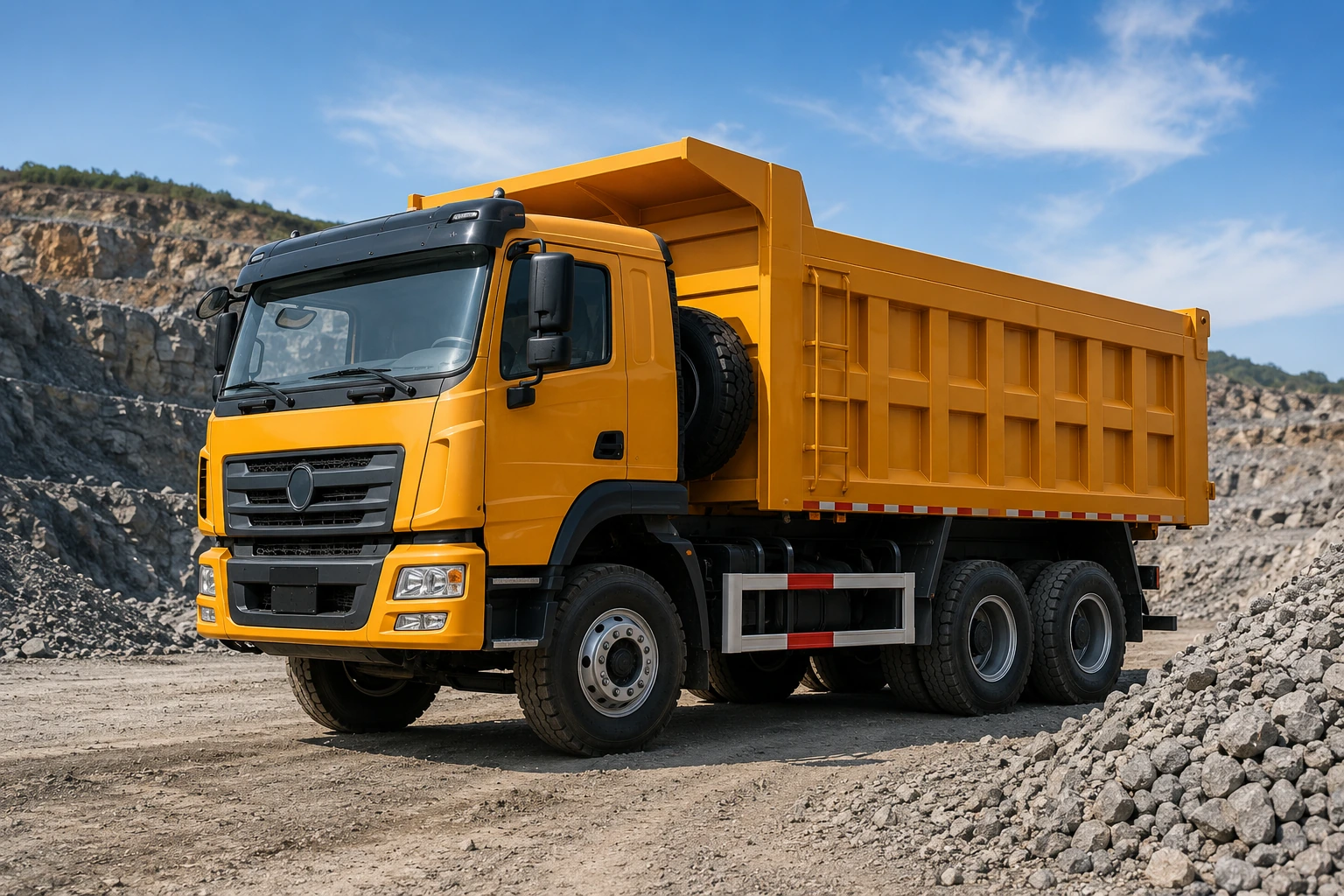
Direct Answer: An integrated dump truck usually fits repeated cycles where tight site access, frequent tipping, simple dispatch and one vehicle owner matter. A tractor plus dump semi-trailer can fit route-based haul where tractors are shared, trailers can be exchanged, or quarry-to-road/port legs are separated. The right choice depends on the complete haul map, coupling compatibility, route rules, turnaround time and maintenance ownership.
This comparison is for quarry operators, bulk-material contractors, fleet owners, logistics companies, dealers and project buyers choosing heavy commercial haul equipment—not pickup-towable dump trailers. Wentu supplies semi-trailers for B2B transport projects together with tractor trucks and dump trucks, so the procurement decision can be framed around fleet architecture instead of one isolated vehicle.
What Does “Dump Truck vs Dump Trailer” Mean in a Heavy Haul Project?
For this decision, “dump truck” means an integrated truck chassis with its tipping body as one operating asset. “Dump trailer” means a heavy dump semi-trailer coupled to a tractor truck. The comparison is therefore between one integrated vehicle and a tractor unit that can pull a dump semi-trailer and potentially other compatible trailers.
The decision should not be reduced to which one carries “more.” Payload and axle limits depend on jurisdiction, configuration and route rules, and this article intentionally does not reuse the already-covered capacity-selection path.
How Should the Haul Cycle Be Mapped Before Equipment Is Compared?
Start by drawing the actual material movement from loading point to discharge point. A quarry may have a constrained pit, an internal haul road, a roadside transfer point, a public-road section, a weighbridge, a port gate and a final stockpile. Each segment creates different requirements.
| Haul Segment |
Buyer Question |
Why It Changes the Architecture |
| Inside quarry / pit |
How tight are turning paths, loading areas and tipping zones? |
Frequent maneuvering and repeated tipping may favor an integrated operating unit. |
| Quarry to public road |
Does the vehicle transition directly from site haul to regulated road operation? |
Route and registration requirements can change the viable equipment combination. |
| Road transfer |
Can the tractor perform other work between dump-trailer assignments? |
Higher tractor utilization may justify a detachable trailer architecture. |
| Port / terminal |
Are there gate, turning, queueing, tipping or coupling constraints? |
Terminal operations can make handoff time and trailer interchange more important than vehicle simplicity. |
Industry experience point: Many fleet comparisons start with vehicle price before the buyer has mapped the handoffs. One extra transfer, queue or coupling step repeated every cycle can change the economics more than a small difference in purchase price.
Where Does an Integrated Dump Truck Reduce Operating Complexity?
An integrated dump truck keeps the chassis, tipping body, hydraulic system and driver workflow in one asset. That can be useful where trucks repeatedly cycle between one loading point and one tipping point, where maneuvering space is limited, or where the operator wants one maintenance owner for the complete vehicle.
It can also reduce coupling-related responsibilities because there is no tractor-to-trailer interface to verify for each operating assignment. The fleet still needs to manage body, hydraulic, chassis, braking and powertrain maintenance, but those systems remain associated with one vehicle record.
Industry experience point: Integrated vehicles are often easier to dispatch in short repetitive cycles because the operator does not need to wait for a matching trailer, coupling check or hydraulic connection before every assignment.
Where Can a Tractor Plus Dump Semi-Trailer Improve Fleet Utilization?
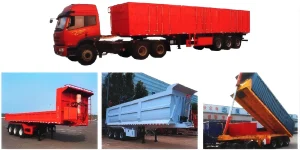
A tractor + dump semi-trailer architecture becomes more interesting when the tractor is a reusable power unit rather than a vehicle dedicated to one body. A tractor may return with another trailer, exchange trailers at a transfer yard, or support different transport tasks if the project’s coupling, braking, hydraulic and legal interfaces allow it.
Wentu’s Dump Semi-Trailer is listed as part of its semi-trailer range for bulk transport applications. The project buyer should still confirm the exact tractor/trailer interface, tipping arrangement and route requirements before assuming interchangeability.
Industry experience point: Trailer detachability creates value only when operations can actually use it. If every tractor is permanently assigned to one trailer, the theoretical utilization advantage may never appear in practice.
How Do Loading Point and Tipping Area Change the Choice?
Loading equipment, ground condition, turning radius, reverse distance, slope, tipping clearance and stockpile layout all influence the cycle. A trailer combination may need more maneuvering room and a different turning path. An integrated dump truck may be simpler in a constrained pit but less flexible when the long road leg dominates the operation.
Before quotation, buyers should provide a dimensioned site sketch or route map showing the loading point, turning path, gradients, road width, tipping area, overhead restrictions and any transfer points.
| Site Condition |
Integrated Dump Truck |
Tractor + Dump Semi-Trailer |
Evidence to Verify |
| Tight quarry loading zone |
Often operationally simpler |
May need more turning and coupling planning |
Turning path, loader position, road width, surface condition |
| Long road transfer |
One dedicated vehicle stays with the load path |
Can offer tractor/trailer scheduling flexibility |
Route map, tractor availability, public-road requirements |
| Transfer yard |
No trailer exchange is required |
Trailer exchange can isolate loading and road-haul stages |
Yard space, coupling time, spare trailer strategy |
| Port queue / terminal |
One asset waits through the whole cycle |
Architecture may support different tractor scheduling |
Gate rules, tipping method, queueing process, coupling policy |
What Tractor and Trailer Interfaces Must Be Confirmed?
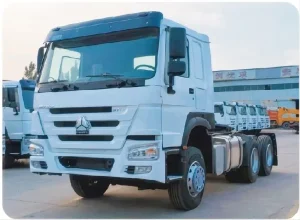
A heavy dump semi-trailer cannot be treated as universally compatible with any tractor. Buyers should verify the coupling arrangement, fifth-wheel interface, tractor frame and connection data, braking system interfaces, electrical connections, hydraulic/PTO requirements for tipping, turning clearance and any project-specific control connection.
Wentu’s HOWO 6×4 Tractor Truck is one available tractor-truck product reference. It should not be interpreted as proof that every dump semi-trailer can be coupled to every tractor configuration without drawings and supplier confirmation.
Industry experience point: “Same fifth wheel” is not a complete compatibility statement. Hydraulic supply, brake interfaces, electrical connectors, kingpin position, turning clearance and operating responsibility may still differ.
How Do Public-Road Rules and Route Permits Affect the Decision?
Quarry equipment that remains on private haul roads faces a different operating boundary from vehicles entering public roads, ports or regulated terminals. Buyers should identify every jurisdiction and route segment before selecting the architecture.
The RFQ should state where the equipment will operate and ask the supplier to provide the vehicle and trailer data required for the buyer’s local compliance review. Do not rely on a universal legal payload, axle limit, registration rule or permit assumption because these vary by location.
Industry experience point: A technically compatible tractor-trailer combination can still become commercially unusable if the project discovers route restrictions only after shipment.
How Should Maintenance Ownership Be Compared?
Maintenance responsibility is simpler to describe for an integrated dump truck because chassis and tipping system remain one asset. A tractor + dump semi-trailer splits the fleet into power units and trailers, which can be an advantage for downtime isolation but also creates more interface management.
Buyers should decide who owns and services the tractor, trailer, hydraulic connections, coupling system, braking interfaces and spare-parts stock. If tractors and trailers come from different suppliers, the warranty and troubleshooting boundary should be written into the RFQ before purchase.
For broader semi-trailer commercial planning, buyers can review the B2B guide to maximizing semi-trailer profitability. The key point is to compare utilization and lifecycle responsibility, not only unit purchase price.
Scenario: Quarry-to-Port Haul With a Transfer Point
Representative scenario — not a claimed Wentu customer case.
Business Background: A quarry moves aggregate from a constrained pit to a roadside transfer yard and then to a port. The pit has tight turning areas, while the public-road leg is longer and tractors may also serve other trailers on return movements.
Problem: Procurement compares an integrated dump-truck fleet with a tractor + dump semi-trailer fleet using only vehicle purchase prices. Both suppliers claim their architecture is more efficient.
Cause: The RFQ does not map the two haul segments, transfer time, tractor availability, coupling responsibility, port queue, route requirements or maintenance ownership.
Solution: The buyer breaks the cycle into pit haul, transfer, road haul and port discharge; records loading/tipping times; identifies available tractors and service locations; and asks each supplier to define vehicle, trailer, coupling, hydraulic, braking, commissioning and spare-parts boundaries.
Buyer Decision Value: The fleet architecture is chosen from real handoffs and utilization opportunities instead of from a generic “truck versus trailer” comparison.
How Should Buyers Compare the Two Architectures Commercially?
| Decision Area |
Integrated Dump Truck |
Tractor + Dump Semi-Trailer |
| Asset structure |
One chassis and tipping body operate as one vehicle |
Power unit and trailer are separable assets |
| Dispatch |
Simple assignment to repeated haul cycles |
Can support tractor/trailer interchange if operations are designed for it |
| Interface risk |
Fewer coupling interfaces between separate assets |
Requires confirmed coupling, braking, electrical and hydraulic compatibility |
| Downtime isolation |
A vehicle failure removes the complete haul asset |
Trailer and tractor downtime may be isolated if compatible spare units exist |
| Maintenance ownership |
One vehicle maintenance record |
Separate tractor, trailer and interface responsibilities |
| Best comparison basis |
Cycle time, maneuvering, availability and lifecycle support |
Tractor utilization, trailer interchange, handoff time, route fit and interface support |
The lowest purchase price should not decide the architecture. Compare cycle time, utilization, additional handoffs, spare units, coupling labor, maintenance ownership, downtime isolation, route suitability and service support over the intended project period.
What Should the RFQ Include Before a Fleet Architecture Is Chosen?
Send the origin/destination and haul-segment map, material and loading method, road surface and gradients, turning constraints, public-road and port requirements, daily cycles, loading and unloading times, available tractor models, coupling details, tipping method, discharge-area constraints, service locations, maintenance ownership, fuel/emissions requirements where relevant, commissioning scope, spare-parts requirements and destination.
Ask the supplier to identify which interfaces are confirmed, which require drawings or local approval, and which responsibilities belong to the buyer.
Frequently Asked Questions
Is a dump semi-trailer the same as a small towable dump trailer?
No. This article concerns heavy commercial dump semi-trailers used with tractor trucks, not pickup-towable equipment used by small contractors.
Is an integrated dump truck always better inside a quarry?
No universal answer applies. Tight maneuvering and repeated short cycles can favor an integrated truck, but the correct choice depends on haul segments, site layout, surface, gradients, tipping area, maintenance and route interfaces.
When does a tractor + dump semi-trailer make more sense?
It becomes more attractive when tractors can be reused across compatible trailers, when transfer yards separate operating stages, or when the road-haul leg creates value from detachable trailer assets.
Can any tractor pull any dump semi-trailer?
No. Coupling, kingpin/fifth-wheel geometry, braking, electrical, hydraulic/PTO, turning clearance and other interfaces must be confirmed from the actual tractor and trailer data.
Which option has lower maintenance cost?
That cannot be stated universally. Compare the actual tractor, trailer or truck configuration, duty cycle, service network, spare-parts policy, maintenance ownership and downtime strategy.
How should public-road legality be checked?
Define the jurisdiction and route, then use the supplier’s vehicle/trailer data for the buyer’s local compliance and permitting review. Avoid applying generic axle or payload rules across countries.
What should buyers send Wentu for a quarry-to-port fleet review?
Send the haul map, material, loading/tipping process, road and site constraints, tractor availability, coupling data, route requirements, service locations, daily cycles, maintenance ownership, commissioning scope and delivery destination.
Request a Quarry-to-Port Fleet Architecture Review
For a project-specific comparison, send Wentu the haul-segment map, loading and discharge conditions, site access, road and port requirements, available tractor configurations, coupling and hydraulic needs, daily cycles, maintenance ownership, commissioning scope, spare-parts expectations and destination through the Contact Us page. Wentu can review dump-truck, tractor-truck and dump semi-trailer options against the actual operating architecture and identify the data still needed before a comparable quotation is prepared.