The cost to rent a dump truck depends on the truck size, payload capacity, rental period, location, delivery distance, fuel terms, insurance requirements, operator needs, and jobsite conditions. There is no single global rental price because local availability and project requirements can change the final quotation significantly.
For a short project, customers may rent a smaller on-road dump truck by the day. For longer construction, quarry, mining, or infrastructure work, a weekly or monthly agreement may provide better value. Large off-road dump trucks and articulated dump trucks generally involve a higher total cost because they offer greater payload capacity and are designed for demanding site conditions.
When comparing a dumper truck for rent, buyers should look beyond the advertised base rate. Delivery, collection, fuel, damage-waiver coverage, operator charges, overtime, permits, and site-support costs can all affect the final rental budget.
What Affects Dump Truck Rental Costs?
A dump truck rental quotation is usually based on several combined factors.
| Cost Factor | Why It Matters |
| Truck size and capacity | Larger trucks usually cost more because they carry heavier or higher-volume loads. |
| Rental duration | Daily rates are often higher per day than weekly or monthly rental arrangements. |
| Truck type | On-road dump trucks, articulated dump trucks, and rigid off-road trucks serve different applications and have different cost structures. |
| Delivery and collection | Transporting equipment to and from the jobsite may be charged separately. |
| Fuel arrangement | Rental agreements may include fuel terms, refueling fees, or fuel-consumption responsibilities. |
| Operator requirement | A truck rented with an experienced operator will have a different cost than equipment-only rental. |
| Site conditions | Rough terrain, remote locations, restricted access, and difficult weather can affect the equipment choice and support needs. |
| Insurance and liability | Coverage requirements vary by market, customer, project type, and rental contract. |
| Permits and road use | Larger on-road trucks may require additional planning, permits, or qualified drivers depending on local rules. |
The most accurate way to budget is to provide the supplier with the material type, expected hauling volume, working hours, site location, loading method, haul distance, rental duration, and whether an operator is required.
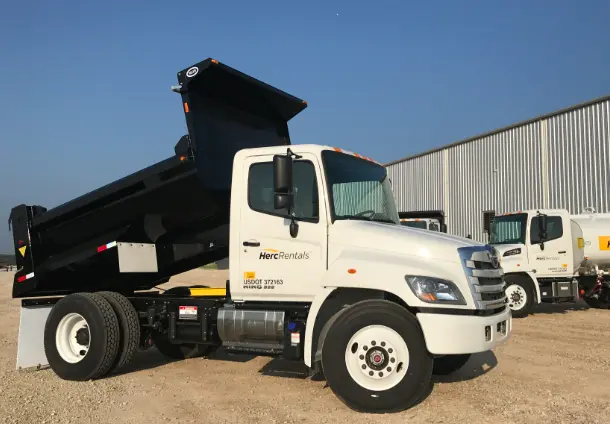
What Type of Dump Truck Do You Need?
The correct truck type has a major effect on rental cost. Renting equipment that is too small can slow down the project, while renting a truck that is too large may create unnecessary expense.
Small Dump Trucks
Smaller dump trucks are commonly used for landscaping, residential construction, utility work, light demolition, and local material transport. They can be suitable for soil, sand, gravel, debris, and similar materials where access is limited.
Their advantages may include easier road access, simpler maneuvering, and lower operating costs. However, they may not be suitable for high-volume hauling or severe off-road conditions.
Medium-Duty Dump Trucks
Medium-duty units are often used on commercial construction sites, roadwork projects, excavation jobs, and aggregate transport operations. They can offer a useful balance between payload, mobility, and operating flexibility.
A medium-duty dumper truck for rent may be a practical option when a project needs regular material movement without the cost and space requirements of a large quarry truck.
Articulated Dump Trucks
Articulated dump trucks are designed for rough terrain, muddy ground, uneven worksites, and heavy-duty off-road hauling. They are commonly used in earthmoving, mining, quarrying, infrastructure, and large construction projects.
These machines generally have a higher rental cost than smaller road-going dump trucks, but they can improve productivity in difficult ground conditions. Their articulated design helps them travel more effectively over uneven terrain.
Rigid Off-Road Dump Trucks
Rigid dump trucks are typically used for large-scale quarrying, mining, and high-volume material transport. They are designed for demanding applications with controlled haul roads and high production targets.
Because of their size, transport requirements, fuel use, and payload capability, they are normally considered for large projects rather than small construction work.
Daily, Weekly, or Monthly Rental: Which Is Better?
The best rental period depends on the project schedule and expected truck usage.
Daily Rental
Daily rental can be suitable for short-term jobs, emergency replacements, one-day material movement, or occasional site work. It offers flexibility but may have a higher daily cost than a longer agreement.
Weekly Rental
Weekly rental may work well for excavation, site preparation, demolition, roadwork, or projects requiring several consecutive days of hauling. It can provide a more predictable cost while allowing the contractor to complete a defined stage of work.
Monthly Rental
Monthly rental is often the better choice for long-term construction, mining, quarrying, infrastructure, and fleet-support projects. It may reduce the effective daily cost and provide more stable equipment availability.
Before selecting a rental period, consider whether the truck will operate every day, how many hauling cycles are needed, and whether the project schedule could change.
Additional Costs to Include in Your Budget
The base rental rate is only part of the total project cost. A complete budget should also include the following items.
Delivery and Collection
Dump trucks may need to be transported to the jobsite. Delivery cost can depend on distance, truck size, access conditions, and transport requirements. Large off-road machines may require specialized transport planning.
Fuel and Operating Fluids
Fuel consumption can be a significant cost, especially for heavy-duty hauling operations. The project team should clarify who is responsible for fuel, refueling, engine fluids, and any related service requirements.
Operator Costs
Some contractors have qualified operators, while others need a truck supplied with an operator. Operator availability, working hours, overtime, accommodation, and safety requirements can affect the final quotation.
Insurance and Damage Responsibility
Rental contracts often define responsibility for accidental damage, theft, misuse, tire damage, and equipment recovery. Customers should review these terms before signing the agreement.
Maintenance and Downtime Support
A reliable supplier should explain the maintenance arrangement, breakdown support, replacement-equipment availability, and expected response process. A lower rental rate may not be the best value if service support is limited.
How to Choose the Right Dumper Truck for Rent
A good rental decision starts with the material and hauling task, not only the price.
Before requesting a quotation, prepare this information:
- Material type
Identify whether the truck will carry soil, rock, sand, gravel, demolition waste, ore, construction debris, or other materials. - Required payload and volume
Estimate the amount of material to move per hour, day, or project phase. - Hauling distance
Short repetitive cycles and long-distance transport may require different truck types. - Ground conditions
Consider paved roads, compacted ground, soft soil, mud, slopes, uneven terrain, and weather exposure. - Loading equipment
The truck body should match the output and bucket size of the excavator, wheel loader, or other loading machine. - Access restrictions
Confirm road width, turning space, bridge limits, overhead clearance, loading-zone layout, and jobsite entrances. - Driver or operator requirements
Confirm whether the project has qualified personnel and whether specific licenses or local requirements apply. - Rental duration
Share the expected start date, working hours, project length, and possible extension needs. - Support expectations
Ask about preventive maintenance, emergency service, spare parts, replacement equipment, and technical assistance.
How Can You Reduce Dump Truck Rental Costs?
Reducing cost does not simply mean choosing the lowest daily rate. The goal is to achieve the lowest total cost for the completed hauling work.
Useful cost-control steps include:
- Selecting a truck matched to the material and loading equipment
- Choosing weekly or monthly rental for longer projects
- Planning delivery and collection in advance
- Avoiding unnecessary idle time
- Managing loading to prevent overloading
- Maintaining safe haul routes
- Confirming fuel terms before the rental begins
- Reviewing damage and insurance terms carefully
- Scheduling regular communication with the rental supplier
- Considering future project phases before returning equipment
A properly selected dump truck can improve cycle times, reduce material bottlenecks, and support more predictable project progress.
Why Equipment Condition Matters
Before accepting a dump truck, the customer should inspect its overall condition and confirm that it is suitable for the intended application.
Important checks may include:
- Tires and wheel condition
- Hydraulic lifting operation
- Braking performance
- Steering response
- Lights, mirrors, and alarms
- Dump-body condition
- Tailgate locking and opening function
- Safety rails and access steps
- Fluid leaks
- Cab controls and display warnings
- Service and maintenance records
For off-road applications, it is also important to confirm that the truck’s traction, ground clearance, and body design suit the site terrain and material type.
Conclusion
The cost to rent a dump truck depends on much more than the daily equipment rate. Truck capacity, rental duration, transport, fuel, operator requirements, insurance, jobsite conditions, and service support all influence the real project cost.
When comparing a dumper truck for rent, choose the equipment based on payload needs, material type, haul route, site conditions, loading equipment, and expected project duration. A clear project brief helps suppliers recommend a suitable truck and provide a more accurate quotation.
For support with dump truck rental, equipment selection, or project requirements, please contact our team.
FAQ
How much does it cost to rent a dump truck per day?
Daily dump truck rental costs vary by location, truck size, capacity, rental supplier, delivery distance, and whether an operator is included. Requesting a project-specific quote is the most reliable way to estimate cost.
Is weekly or monthly dump truck rental cheaper?
For longer projects, weekly or monthly rental often provides a lower effective daily cost than a short daily rental. The best option depends on actual usage and project duration.
Does dump truck rental include an operator?
Not always. Some rental agreements provide equipment only, while others can include a qualified operator. Confirm this before finalizing the rental arrangement.
What information do I need for a dump truck rental quote?
Provide the jobsite location, material type, estimated load volume, hauling distance, rental period, working hours, access conditions, and whether an operator is required.
Pricing is intentionally described as quote-based because current rental providers show availability and rates by location, while truck capacity and operating requirements vary materially by class and project.